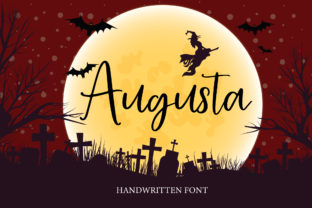
Augusta: A Handwritten Font for Halloween Web Design
I was staring at a blank hero section on my laptop, trying to nail the vibe for a client's seasonal campaign. The brief was specific: a spooky yet welcoming landing page for an online boutique selling handmade Halloween decor. I needed a typeface that screamed "Halloween" without looking like a cheap clip-art sticker. That is when I pulled Augusta from my library of Script Amp fonts. As I typed out the headline, "Trick or Treat," the screen transformed instantly. It wasn't just text; it felt like a message scrawled in ink by a friendly ghost. This moment highlighted exactly why Augusta stands out as a premium font for digital creators who need personality and atmosphere.
Bringing Spooky Atmosphere to Hero Sections
In web design, the hero section is your first impression. It needs to stop the scroll and set the mood immediately. Augusta excels here because its handwritten style feels organic and human, breaking away from the sterile perfection of standard sans serif fonts. When I applied Augusta to the main headline against a deep charcoal background with subtle orange accents, the contrast was striking. The irregular strokes and natural flow of the letters gave the page a sense of movement and mystery.
This display font works beautifully for short, punchy headlines. Whether you are designing a product landing page for a new line of witch-themed candles or a blog header announcing a spooky story series, Augusta commands attention. It adds a layer of editorial design flair that makes the brand feel curated and creative. Unlike rigid geometric typefaces, this script font invites the user into a narrative. It suggests that what lies beneath the fold is something special, handcrafted, and perhaps a little magical.
Navigating Readability in Responsive Layouts
While Augusta is visually stunning, a practical web designer always worries about readability across devices. I tested the font on mobile views, shrinking the viewport to see how the intricate details held up. The good news is that Augusta maintains its character even at moderate sizes, provided you give it enough breathing room. For a responsive layout, I found that using Augusta for H1 and H2 tags worked perfectly, while keeping body copy in a clean, legible sans serif font ensured the content remained accessible.
One key takeaway from my testing is the importance of letter spacing. Because Augusta is a handwritten font with varying stroke widths, tight kerning can sometimes cause the letters to blur together on smaller screens. By slightly increasing the tracking, the individual characters popped, making the text easier to scan quickly. This is crucial for UX; users should not have to squint to read your call-to-action. If you are placing Augusta over a busy image banner, ensure there is a dark overlay or shadow effect to maintain contrast. This simple tweak ensures your digital assets remain professional and user-friendly, regardless of the device.
Strategic Font Pairing for Digital Brand Identity
No great web design relies on a single typeface. To create a cohesive brand identity, Augusta needs the right partner. In my project, I paired Augusta with a neutral, modern sans serif font for the navigation menu and paragraph text. This combination created a perfect visual hierarchy. The playful, spooky energy of Augusta balanced well with the stability and clarity of the secondary font.
For designers aiming for a more vintage or gothic aesthetic, pairing Augusta with a classic serif font can also yield fantastic results. Imagine a wedding invitation website with a Halloween twist; the elegance of a serif font for the couple's names combined with Augusta for the event details creates a sophisticated yet festive look. This approach to font pairing allows you to use Augusta as a decorative accent without overwhelming the user interface. It elevates the design from a simple template to a custom, high-end experience.
Ideal Use Cases and Limitations for Web Projects
Understanding where Augusta shines—and where it might struggle—is essential for any commercial font usage. This typeface is ideal for:
- Landing Page Headlines: Grabbing attention with seasonal campaigns or limited-time offers.
- Logo Design: Creating memorable wordmarks for boutiques, bakeries, or event planners.
- Social Media Graphics: Adding personality to Instagram stories, Pinterest pins, and promotional banners.
- Button Text: Using it sparingly on primary call-to-action buttons to make them feel unique and clickable.
However, there are clear limitations. Augusta is not suitable for long paragraphs of body copy. Its decorative nature makes reading large blocks of text difficult and fatiguing for the user. Similarly, avoid using it for small navigation links, form labels, or technical instructions where clarity is paramount. In a dashboard layout or a data-heavy application, this script font would detract from usability. Stick to using Augusta for display purposes where emotion and style take precedence over dense information delivery.
Technical Considerations for Developers and Designers
Before integrating Augusta into your live site, check the technical specifications included in the package. Ensure the file formats (such as WOFF2 or TTF) are optimized for web performance to keep your load times fast. Slow-loading fonts can hurt your SEO and bounce rates. Additionally, verify the multilingual support if your audience is global. While many script fonts focus on Latin characters, some may lack extended language sets.
Licensing is another critical factor. Since Augusta is often used for commercial projects, confirm that the license covers web usage, including embedding on client websites, e-commerce stores, and digital templates. Many designers overlook this until they are ready to launch, only to find restrictions on server-side rendering or unlimited domains. Always review the terms to ensure you are compliant, protecting both your business and your clients.
Elevating Your Halloween Digital Experience
After spending time with Augusta in a real-world web design scenario, it is clear that this font is more than just a seasonal novelty. It is a powerful tool for creating emotional connections with your audience. Whether you are building a portfolio homepage, a course sales page, or a seasonal campaign, Augusta brings a touch of whimsy and warmth that generic fonts simply cannot match.
The key is balance. Use it to highlight your most important messages, pair it wisely with functional typefaces, and respect its role as a display element. When done correctly, Augusta transforms a standard website into an immersive experience. It proves that in the world of modern typography, a well-chosen handwritten font can be the difference between a visitor scrolling past and one who stops to say, "Happy Halloween."